


Chase Ink Lifetime Rule
You may be ineligible for the signup bonus on the Chase Ink Business Preferred or Chase Ink Business Premier if you currently have, or previously had, that same card.
Deep Dive into the Chase Ink Lifetime Rule Rule
Chase now has two separate lifetime-style bonus rules covering its four Ink Business cards. Understanding which rule applies to which card is important because they work very differently.
The Chase Ink No Fee Lifetime Rule applies to the Ink Business Cash and Ink Business Unlimited. It is a family rule, meaning you may not be eligible for the signup bonus on either card if you currently have or previously had either one.
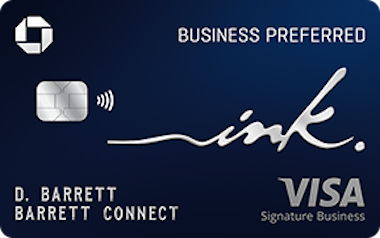
This page covers the separate Chase Ink Lifetime Rule, which applies to the Ink Business Preferred and Ink Business Premier. Unlike the no-fee rule, the restriction applies separately to each card rather than across the family, so you should be allowed to get both cards and earn the signup bonuses on each.
Here are the terms currently shown on both card pages:

What does this mean?
- If you currently have or previously had the Ink Business Preferred, you may not be eligible for its signup bonus again.
- The same restriction applies separately to the Ink Business Premier.
- Having one of these cards does not by itself make you ineligible for the bonus on the other one.
- The Preferred/Premier restriction also does not overlap with the Ink No Fee Lifetime Rule.
In practice, this means you should still be able to earn signup bonuses on three of Chase's four Ink cards over your lifetime:
- The Ink Business Preferred
- The Ink Business Premier
- Either the Ink Business Cash or Ink Business Unlimited
Chase Popup
Chase also checks your bonus eligibility during the application process. If you are not eligible for the welcome offer, a popup appears before Chase performs a hard credit inquiry.
You can cancel the application at that point with no hard pull on your credit report, or continue with the application knowing that you will not receive the signup bonus. This makes it possible to test your eligibility if you are unsure whether Chase will enforce the lifetime restriction in your situation.
This rule is considerably less restrictive than the Ink No Fee Lifetime Rule. The Ink Business Preferred and Ink Business Premier each have their own bonus restriction, so you should still earn the signup bonus on both cards rather than having to choose between them.
Related Rules
How Does This Affect Your Credit Card Strategy?
If you're new to points and miles, this rule is fairly straightforward. You can still earn the welcome bonus on both the Ink Business Preferred and Ink Business Premier, but because each bonus may only be available once, it makes sense to be selective and wait for strong offers when possible.
Although this rule applies to both cards, we generally recommend prioritizing the Ink Business Preferred over the Ink Business Premier. The Preferred earns transferable Ultimate Rewards points that can be moved to Chase's airline and hotel partners. The Premier earns cash back only, and those rewards cannot be combined with points from another Chase card to make them transferable. You can redeem through the Chase Travel portal, but it will be at a fixed 1¢ per point redemption.
The Premier can still have a valuable signup bonus, especially if the offer is unusually high, but we view it primarily as a cash-back card rather than a core Ultimate Rewards card.
For longtime hobbyists, this rule represents a major shift. Many people repeatedly opened and closed Ink cards to replenish their Chase Ultimate Rewards balances. While the Chase popup makes it worthwhile to test your eligibility if you're unsure, the days of relying on repeat Ink bonuses appear to be over.
If your goal is to stay within the Chase ecosystem, the strategy has shifted from repeatedly earning Ink bonuses to earning each Ink bonus when the offer is strong, maintaining at least one card with transfer partner access, and supplementing your Ultimate Rewards balance with co-branded cards from the partners you use most.
Replace Ink Bonuses With Partner Bonuses
If you regularly transfer Ultimate Rewards points to the same airline or hotel programs, one of the best ways to adapt is to start earning points directly with those partners instead of relying as heavily on Chase signup bonuses.
Hyatt credit card options
Hyatt currently offers one personal and one business credit card. Both follow the Hyatt 1/24 Rule, which allows you to earn another signup bonus after the applicable 24-month period has passed.
A simple long-term pattern could be:
- Year 1: Apply for the personal Hyatt card.
- Year 2: Apply for the Hyatt Business card.
- After the 24-month restriction expires: Consider cycling back to the personal card if it still fits your strategy.
Southwest credit card options
Southwest offers several cards that can also help replace some of the points you previously earned through repeat Ink bonuses.
- The Southwest Personal 24 Rule allows only one signup bonus across the personal Southwest card family during the applicable 24-month period.
- Southwest also has two business cards, and their bonus restrictions apply separately.
- That gives you multiple opportunities to earn Southwest bonuses before cycling back through the waiting periods.
United credit card options
United offers even more flexibility because each card follows its own 24 From Bonus Rule. You can earn bonuses across multiple United cards without running into the same kind of lifetime-style restriction that now applies to the Ink cards.
If Hyatt, Southwest, and United make up a large part of your Chase transfer strategy, their co-branded cards can become a much bigger part of how you build points going forward. Instead of using Ultimate Rewards as your primary source of points in those programs, you can build balances directly and use Chase points to top off award bookings when needed.
The same idea applies to other Chase transfer partners with co-branded cards. The best approach is to identify the programs you use most, build balances directly in those ecosystems, and preserve your Ultimate Rewards points for the redemptions where their flexibility matters most.
The old strategy was to repeatedly earn Ink bonuses. The new strategy is to be more selective with each Chase signup bonus opportunity, build more points directly with transfer partners, and use Ultimate Rewards as the flexible currency that fills in the gaps.
Importance of this Rule
* * *
This rule is more important for longtime hobbyists who have relied on Chase Ink cards to replenish their Ultimate Rewards balances. Chase had already tightened Ink approvals in the previous year, so many of us were forced to slow down. But repeat bonuses were still possible, which means this rule requires another major adjustment.
If you're just getting started in the points and miles world, the impact is smaller. The key is simply understanding the rule from the beginning and planning around it. Under the current restrictions, you should generally expect to earn signup bonuses on three of Chase's four Ink cards: the Ink Business Preferred, the Ink Business Premier, and one of the two no-annual-fee Ink cards.
Because those opportunities may be limited, it makes sense to be selective and wait for strong or elevated offers when your overall strategy allows it.
Cards Subject to This Rule


FAQs
Are there exceptions to this rule?
Chase's terms use the phrase "may not be available," which leaves room for exceptions. In practice, though, most cardholders who previously held one of these cards appear to remain ineligible for another signup bonus. We have seen occasional data points of people receiving another bonus, but they are much less common than denials. Most of those exceptions involve someone applying with an EIN for an LLC after previously holding the card as a sole proprietor using their Social Security number.
We recommend assuming you will only have one signup bonus opportunity on each card. Fortunately, Chase's popup appears before a hard credit inquiry, so there is little downside to testing your eligibility if you previously held the card.
How do I check my status?
If you add all of your Chase cards to Points Navigator, we track these rules for you and account for them when determining which signup bonuses you may still be eligible for.
Do other business cards count for this rule?
No. This specific rule applies separately to the Chase Ink Business Preferred and Chase Ink Business Premier. Other Chase business cards have their own bonus eligibility restrictions.
Do product changes on existing cards count for this rule?
Potentially. Chase's terms focus on whether you have ever had the card, not whether you earned its signup bonus. If a product change results in you holding the Ink Business Preferred or Ink Business Premier, that could affect your future bonus eligibility on that card. Because of that, we would avoid product changing into either card before earning its signup bonus if that opportunity matters to you.
About Approval Rules
Collecting credit card points is largely driven by understanding and abiding by bank rules regarding approval (or disapproval) of cards. So here's what you need to know:
- Approval rules are rarely fully publicized by the banks
- We use our own research and data points from other users in creating the rules listing
- Our goal in sharing/using the rule listings is to provide you guidance to avoid getting declined
- There can sometimes be exceptions to the rules, but we try to take a more cautious approach in advising you.