


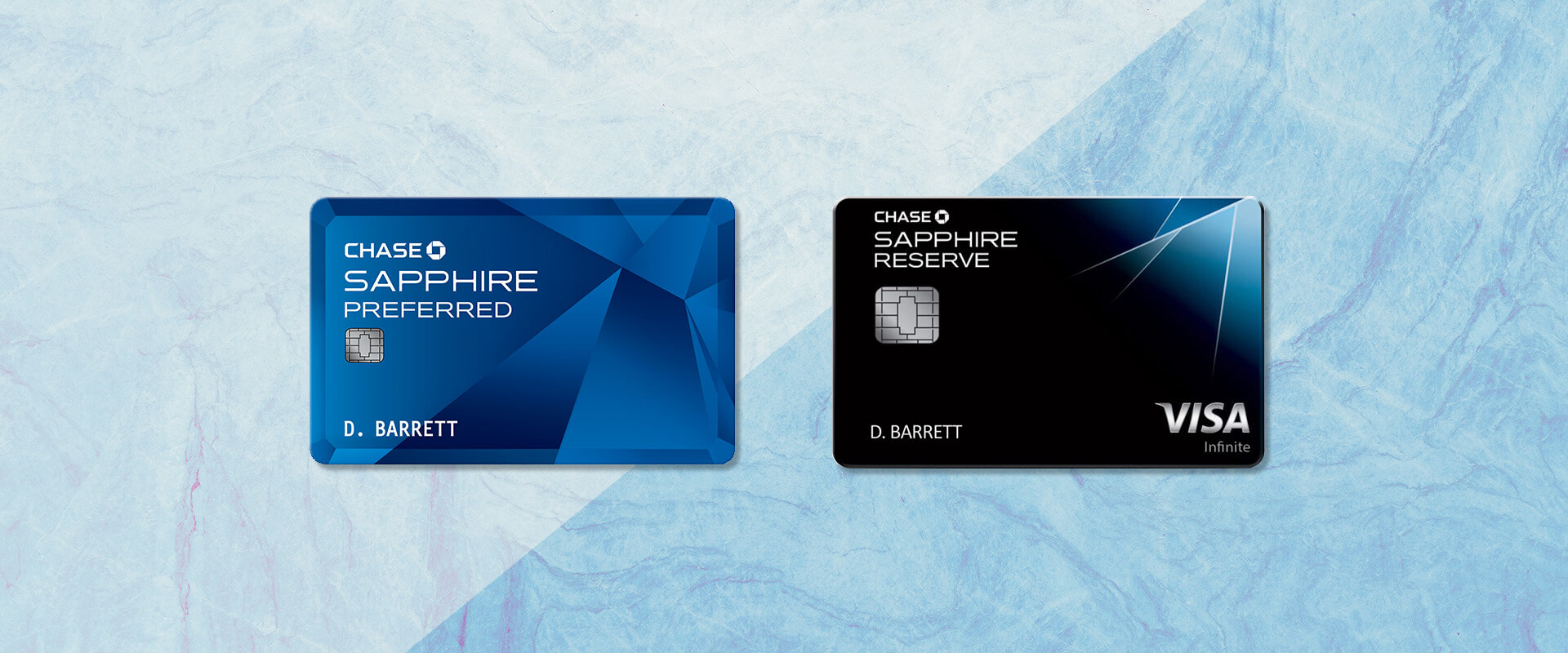
Is Chase Sapphire Reserve Or Preferred Better?

Updated on Tue, 30 Jun 2026
With new Sapphire rules, reduced Hyatt transfer value on the Preferred, and a much larger annual fee on the Reserve, choosing between the two cards is no longer as simple as it once was.
Quick take
The Sapphire Preferred remains our recommendation for most beginners because it's a great introduction into both points and miles and the Chase ecosystem. However, because of the lifetime restrictions on both cards, we highly suggest waiting for an elevated offer on each card to maximize your points earning, so there are situations it may make sense to get the higher annual fee Reserve card first.
The biggest question to ask yourself is simple: Do you expect Hyatt transfers to be a major part of your Ultimate Rewards strategy? If yes, lean toward the Reserve. If not, the Preferred is usually the better starting point.
Sapphire rules
Chase has lifetime restrictions on each Sapphire card. This means you can only open and earn the signup bonus on each card one time. Since this rule went into effect, most data points have suggested “lifetime” truly means forever and does not function like Amex’s 7–10 year window.
While the lifetime rule is a downside, there is a meaningful upside. You can now hold both Sapphire cards at the same time and earn the signup bonus on each, even while holding the other. Under the previous rules, earning a welcome offer on one disqualified you from earning one on the other (for 48 months), and you couldn't hold both at once. This change creates new flexibility that didn’t exist before.
Perhaps the biggest change is that you no longer have to choose perfectly the first time.
Other factors to consider
There are several factors to consider when choosing which card to apply for first.
- The annual fee difference is immense - $95 for the Sapphire Preferred vs. $795 for the Sapphire Reserve.
- The Sapphire Reserve's high annual fee also means it comes with a long list of benefits and perks, which can easily make up for that high fee. This is especially true in the first year you own the card, since the high welcome offer alone is worth more than the annual fee.
- If you are a beginner, though, there is a much bigger learning curve to maximizing all the Reserve's benefits.
- Because of this, you'll want to learn as much as you can about maximizing all the statement credits, which can seem overwhelming to beginners.
- If you are getting a new card to use the points for a specific trip, then how you hope to redeem your points matters.
- For example, if you plan to transfer most or all of the Ultimate Rewards points you earn to World of Hyatt, then it's important to know that the Chase Sapphire Preferred card transfers to Hyatt at a reduced, 4:3 ratio.
- The Chase Sapphire Reserve transfers to Hyatt at 1:1, so the 25% reduction in value is a big deal if you prioritize Hyatt stays.
- If Hyatt isn't a major part of your redemption strategy, the Preferred is usually the better starting point. You can always upgrade to the Reserve later if your travel plans change.
- Once you've earned the welcome offer on both cards, think of them as tools rather than permanent decisions. You can product change between them after the first year as your travel plans evolve.
Two player mode
If you have a spouse, partner, or another family member you’re playing two-player mode with, one person can apply for the Reserve while the other applies for the Preferred. This allows both of you to evaluate the value of each card. Since you can now hold both and earn both bonuses, you can later apply for the second Sapphire card when it makes sense based on elevated offers and your broader card strategy.
Remember to refer each other to earn referral bonuses in addition to the signup offers.
Product changing strategy
If you later change your mind or your travel redemption priority changes, you can always product change again. Since Sapphire bonuses are now limited to once per lifetime, upgrading does not affect future bonus eligibility.
If you are planning a trip in the upcoming year where transferring to Hyatt is a big part of your redemption strategy, then you can upgrade to the Reserve to get 1:1 Hyatt transfers. That alone may justify the increase in annual fee, plus you can take advantage of the annual $300 travel credit plus all the other benefits, perks, and statement credits before downgrading again when it makes sense (realizing that you will have to hold the card for a year after product changing).
Which should you hold long term?
If you plan to stay in the points and miles hobby, you want at least one Chase card in your wallet that allows you to transfer Ultimate Rewards points to partners. There are only four Chase cards that do this, and the Sapphire cards are two of them.
- The Chase Sapphire Reserve personal card and the Chase Sapphire Reserve Business card both transfer to all partners at 1:1 ratios, including World of Hyatt.
- The Chase Sapphire Preferred personal card and the Chase Ink Business Preferred card also transfer to partners at 1:1 except for World of Hyatt, which transfers at a reduced 4:3 ratio.
You could hold both long term if it makes sense for your situation, particularly if you are in a two-player household. But if you're only going to keep one in your wallet long-term, here are some things to think about:
- Keep the Reserve if:
- You consistently extract value from its benefits vs. its annual fee and don’t mind managing its credits.
- You value Hyatt transfers, since it is one of two Chase cards that transfer to Hyatt at 1:1. The Preferred’s reduced 4:3 ratio can add up quickly if Hyatt redemptions are your primary use of Ultimate Rewards points.
- You prioritize premium travel and can use the Reserve’s lounge access, travel protections, statement credits, and other premium perks.
- Choose the Preferred if:
- The Reserve’s annual fee feels too high.
- You don’t want to manage all the statement credits that come with the Reserve.
- You want a lower-fee card that still offers transferable points, strong travel protections, and enough annual credits to make the $95 fee easy to justify.
After choosing your keeper card, downgrade the other instead of canceling it.
- Downgrade within 30 days of the annual fee posting to receive a refund.
- Downgrade to the Chase Freedom Unlimited or Chase Freedom Flex.
- Points earned on those cards can still be transferred to your Sapphire card.
 Chase Sapphire Preferred
 Chase Sapphire Reserve
 Chase Ultimate Rewards
 Sapphire Lifetime
 Statement Credits